Technology
Do the Driving Modes in Cadillac Lyriq Offer Different Ranges or Battery Usage?

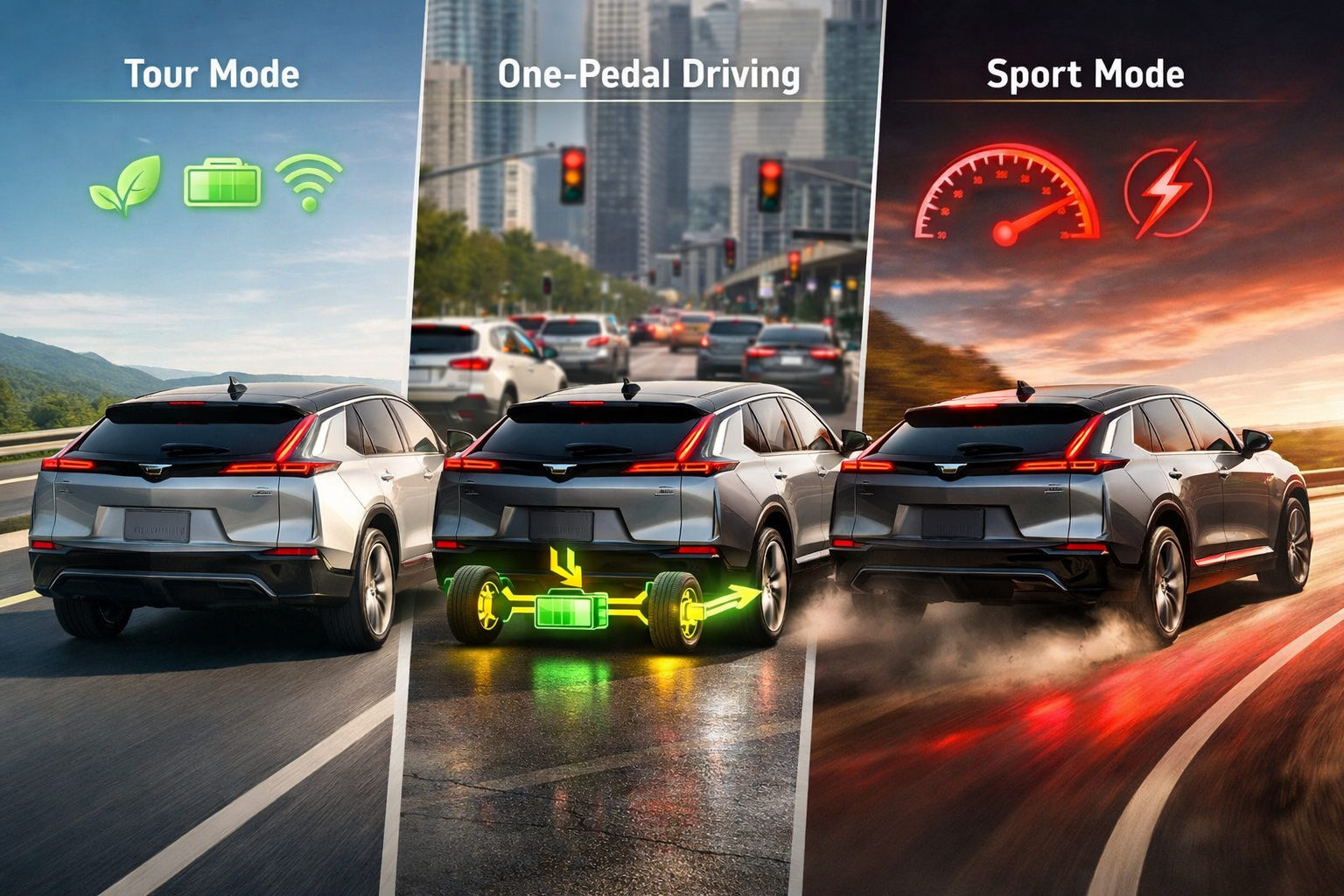
Electric vehicles promise heavy performance, lower running costs, and freedom from fuel stops—but range anxiety is still real. For Cadillac Lyriq owners and buyers, one question comes up repeatedly: do the driving modes in the Cadillac Lyriq actually change range or battery usage, or is it mostly a driving “feel” difference?
The short answer is yes—they do. The longer answer explains how, why, and when those differences matter in everyday driving across cities, highways, climates, and use cases.
This guide breaks it down clearly, using real-world logic rather than marketing language, so you can make smarter decisions behind the wheel and get the most out of every charge.
Cadillac Lyriq Driving Modes: What They Really Control
The Cadillac Lyriq is built on General Motors’ Ultium Platform, which relies heavily on software to manage power delivery, regenerative braking, and energy efficiency. Driving modes aren’t cosmetic—they directly adjust how the electric motors, battery, and braking systems behave.
In global markets like the US, Canada, the UK, the EU, and Australia, the Lyriq commonly offers three efficiency-relevant modes:
- Tour Mode
- Sport Mode
- One-Pedal Driving (can be combined with other modes)
Each one influences:
- Throttle response
- Power output timing
- Regenerative braking strength
- Overall battery consumption per mile (mi/kWh)
Do Driving Modes Affect Range?
Yes, Cadillac Lyriq driving modes offer different real-world ranges and battery usage patterns, even though the EPA or WLTP rating stays the same.
That’s because regulatory range tests are performed under controlled conditions, while driving modes affect how aggressively or efficiently energy is used in everyday scenarios.
Tour Mode: The Efficiency Benchmark
What Tour Mode Does
Tour Mode is designed for balanced daily driving. It smooths out throttle inputs and moderates how quickly power is delivered from the battery to the motors.
Impact on Battery Usage
- Lower peak power draw
- More predictable energy consumption
- Optimized for steady speeds
Real-World Range Effect
Tour Mode typically delivers the best overall range, especially for:
- Highway driving
- Long-distance trips
- Consistent cruising speeds
For drivers in regions with long motorway stretches—such as the US interstate system, UK motorways, or European autobahns—Tour Mode aligns closest with official range expectations.
Bottom line:
If your goal is maximum miles per charge, Tour Mode should be your default.
Sport Mode: Performance at a Cost
What Sport Mode Changes
Sport Mode sharpens throttle mapping and allows quicker access to the Lyriq’s torque. Acceleration feels stronger, and responsiveness improves noticeably.
Impact on Battery Usage
- Higher power draw during acceleration
- Faster energy depletion in stop-and-go traffic
- Reduced efficiency per mile
Real-World Range Effect
Sport Mode reduces range, sometimes significantly, depending on driving style. Aggressive acceleration compounds energy loss because EV motors consume the most power when delivering instant torque.
This effect is amplified:
- In urban traffic
- On short trips
- In colder climates where batteries are already less efficient
Is Sport Mode bad for the battery?
Occasional use isn’t harmful, but using it daily will increase energy consumption and charging frequency.
One-Pedal Driving: Efficiency Through Regeneration
How One-Pedal Driving Works
One-Pedal Driving increases regenerative braking, allowing the vehicle to slow down dramatically when you lift off the accelerator. That deceleration converts kinetic energy back into stored battery energy.
Impact on Battery Usage
- Higher energy recovery in traffic
- Reduced reliance on friction brakes
- Lower net energy loss per mile in cities
Real-World Range Effect
One-Pedal Driving improves efficiency in urban and suburban environments, especially where frequent stops are unavoidable.
Cities like New York, London, Toronto, or Sydney benefit the most, as regenerative braking thrives in dense traffic patterns.
Important note:
On highways, One-Pedal Driving offers minimal benefit because there’s less braking and deceleration.
Driving Mode Comparison: Range & Battery Usage
| Driving Mode | Battery Usage | Range Impact | Best Use Case |
|---|---|---|---|
| Tour Mode | Lowest | Longest | Highway & daily driving |
| One-Pedal Driving | Low (city) | Extended urban range | Stop-and-go traffic |
| Sport Mode | Highest | Shorter range | Short, performance-focused drives |
City vs Highway: Why Your Range Changes
City Driving
- Frequent braking enables energy regeneration
- One-Pedal Driving shines
- Efficiency often exceeds expectations
Highway Driving
- Sustained high speeds increase aerodynamic drag
- Minimal regeneration
- Tour Mode provides the best balance
This explains why many drivers see better real-world range in cities than on highways, despite intuition suggesting the opposite.
Climate and Geography: A Hidden Variable
Driving mode impact doesn’t exist in isolation. Climate plays a major role.
Cold Climates (Canada, Northern Europe)
- Battery chemistry is less efficient
- Cabin heating increases energy draw
- Sport Mode penalties become more noticeable
Hot Climates (Southern US, Australia)
- Air conditioning consumes additional power
- Tour Mode helps stabilize consumption
Driving mode selection becomes even more important when environmental factors already strain efficiency.
EPA vs Real-World Range: Why They Don’t Match
Regulatory range figures (EPA in the US, WLTP in Europe) assume:
- Moderate acceleration
- Controlled speeds
- Minimal climate control usage
Driving modes change those assumptions. Sport Mode, aggressive throttle inputs, and heavy HVAC use all push real-world results below official numbers.
This doesn’t mean the Lyriq underperforms—it means driver behavior matters more in EVs than in gasoline vehicles.
Decision Framework: Which Mode Should You Use?
Use this simple guide:
- Daily commuting, mixed roads: Tour Mode + One-Pedal Driving
- City-only driving: One-Pedal Driving enabled
- Long road trips: Tour Mode
- Short, spirited drives: Sport Mode (sparingly)
Switching modes strategically can reduce charging stops without changing routes or habits.
Long-Term Battery Health Considerations
While modern lithium-ion batteries are resilient, sustained high power draw:
- Increases thermal stress
- Raises charging frequency
- Accelerates long-term degradation
Using Tour Mode most of the time helps preserve battery health and stabilizes ownership costs over the vehicle’s lifespan.
Cadillac Lyriq vs Other Luxury EVs
Compared to competitors like the Tesla Model Y or Audi Q8 e-tron, the Lyriq’s driving modes are less aggressive but more predictable. Tesla’s performance modes often sacrifice efficiency more sharply, while Audi prioritizes refinement over regeneration strength.
The Lyriq sits in the middle—favoring comfort, consistency, and controllable efficiency.
Common Mistakes That Reduce Lyriq Range
- Leaving Sport Mode enabled by default
- Aggressive acceleration from every stop
- Ignoring regenerative braking features
- Overusing climate controls without preconditioning
Small adjustments can reclaim noticeable range.
FAQs
Do the driving modes in Cadillac Lyriq offer different ranges or battery usages?
Yes. Tour Mode is the most efficient overall, One-Pedal Driving improves city efficiency, and Sport Mode increases battery consumption.
Which Cadillac Lyriq mode is best for long trips?
Tour Mode delivers the most consistent and predictable range for highway driving.
Does Sport Mode reduce EV range significantly?
Yes, especially with frequent acceleration and short trips.
Is One-Pedal Driving good for battery life?
Yes. It improves efficiency and reduces brake wear, particularly in city driving.
Why does my Lyriq range drop faster on highways?
High speeds increase aerodynamic drag, and there’s less regenerative braking compared to city driving.
Can driving modes change the official EPA range?
No. EPA ratings stay the same, but real-world results vary by mode and driving style.
Does climate affect which mode I should use?
Yes. In extreme heat or cold, Tour Mode helps manage energy consumption more effectively.
Conclusion
Driving modes in the Cadillac Lyriq aren’t just about feel—they directly influence range, battery usage, and long-term efficiency. Tour Mode delivers the longest range, One-Pedal Driving maximizes urban efficiency, and Sport Mode trades miles for performance.
Understanding when and how to use each mode allows you to drive farther, charge less often, and enjoy the Lyriq exactly as it was designed to be driven—intelligently.



Messagenal is a communication method focused on sending clear, structured, and purposeful messages — so the person reading them always knows what you mean and what to do next. It is not a single app. It is a better way to write and send messages, usable across any platform you already have.
You have probably felt it. You open a chat and there are 47 unread messages. Half of them say things like “done?” or “update?” or “ok.” You spend five minutes figuring out what anyone actually wants. That is the problem Messagenal solves.
This guide explains what Messagenal means, why it is gaining traction, and how to start using it — step by step.
What Is Messagenal and How It Works
Messagenal is a structured communication method that makes messages clear, complete, and actionable. Instead of fast, vague texts, Messagenal encourages messages that tell the reader exactly what is being asked and when.
Here is a simple comparison:
- Without Messagenal: “update?”
- With Messagenal: “Please share the project update by 5 PM so we can send it to the client.”
Same request. Completely different clarity. That small shift is what Messagenal is about.
What Does Messagenal Mean in Simple Words?
Messagenal means clear, structured communication. Every message has a purpose. Every message is complete. No confusion. No guessing.
Think of it like tidying a room. When everything is in its place, you find what you need quickly. Messagenal does the same thing for your chats.
Why Is Messagenal Becoming Popular?
Most people today juggle multiple platforms — WhatsApp, email, Slack, social media DMs — all at once. Messages pour in from every direction. And most of them are unclear.
When a message is vague, the reader has to ask a follow-up question. That follow-up takes time. The back-and-forth adds up. Stress builds.
Messagenal is gaining attention because it cuts that loop. Clear messages mean fewer follow-ups, faster replies, and less mental noise. In a world that runs on digital communication, that matters.
Messagenal Key Features That Make Chats Easy
Messagenal-style communication is built around a few core ideas:
- Real-time clarity: Messages are fast and meaningful at the same time.
- Organized chat structure: Conversations are easy to scan and follow.
- All-in-one simplicity: File sharing, notes, and reminders stay inside the same conversation thread.
The result is that important information does not get buried. You spend less time searching for what matters.
What Are the Benefits of Messagenal for Daily Life?
Messagenal reduces confusion, saves time, and lowers communication stress. When messages are clear, people respond faster. Conversations move forward instead of circling back.
There is also a quieter benefit: peace of mind. Clean chats feel calmer. You feel more in control of what is happening around you.
A simple example: planning a family dinner. One clear Messagenal-style message — time, place, and plan — replaces a dozen unclear back-and-forths.
How Does Messagenal Help Work and Business Communication?
In professional settings, unclear messages cause real problems. Tasks get missed. Deadlines slip. Frustration builds.
Messagenal fixes that. Compare these two messages:
- Unclear: “check this”
- Messagenal-style: “Please review the attached report and share your feedback by 4 PM today.”
The second version removes all guesswork. The reader knows exactly what to do. Teams that communicate this way complete work faster and make fewer mistakes. Everyone stays on the same page — not because they are lucky, but because the messages make it impossible to be confused.
How Does Messagenal Help Personal Chats and Family Communication?
Messagenal is not just for work. It helps in personal life too.
Instead of texting “party?” to a group, you send: “Are you free for dinner at 8 PM this Saturday at Marco’s?”
That one change makes planning easier. It also reduces the small misunderstandings that build up in close relationships. When people understand each other clearly, conversations stay warm instead of tense.
Messagenal vs. Normal Messaging Apps: What Is the Difference?
Normal messaging apps are built for speed. Messagenal is built for clarity. Both matter, but they solve different problems.
| Feature | Normal Messaging | Messagenal Method |
|---|---|---|
| Speed | Fast | Fast |
| Clarity | Often unclear | Structured and complete |
| Organization | Messages can get buried | Easy to find key information |
| Follow-up questions | Frequent | Minimal |
Messagenal works within normal messaging apps. It is not a replacement. It is a better habit applied to whatever platform you already use.
How to Start Using Messagenal Step by Step
Starting is easier than you think. Here is how to begin:
- Create an account on any platform or tool that supports structured messaging.
- Set up your first chat or group and invite the people you communicate with most.
- Write your first Messagenal-style message. Explain what you need and when you need it.
- Repeat. After a few days, it becomes a natural habit.
That is it. You do not need a course or a manual. Just start writing clearer messages, one at a time.
Messagenal Safety and Privacy Tips
Clearer communication also means safer communication. A few habits worth building:
- Use strong, unique passwords to protect your accounts.
- Enable two-step verification wherever available.
- Do not share personal information with people you do not know.
- Check links carefully before clicking them.
Safe communication builds trust. That trust makes every conversation easier.
Messagenal Tips to Improve Your Communication
The goal is simple: every message should be clear, helpful, and easy to act on. Here is how to get there:
- Write the full idea. Avoid short, incomplete texts like “ok?” or “done?” Explain what you mean.
- Think before you send. Ask yourself: “Will the other person understand this without asking a follow-up?” If not, revise it.
- Use specifics. Instead of “send file,” write: “Please send the project file by 3 PM so I can review it before the meeting.”
These are small changes. But small changes in how you write produce big changes in how well people respond.
What Is the Future of Messagenal in Digital Communication?
The future of Messagenal points toward smarter, AI-assisted clarity. As digital communication grows, so does the need for structure.
In the near future, AI tools may suggest clearer versions of your message before you send it. Chats may auto-organize so important messages rise to the top. Low-priority threads stay in the background without cluttering your view.
The direction is clear: less noise, more meaning. Messagenal is aligned with where communication technology is heading in 2026 and beyond.
Messagenal in Business and Workplace Communication
Workplaces run on messages. Updates, task assignments, approvals, reports — all of it moves through text. When that text is unclear, work slows down.
Messagenal-style business communication looks like this:
- Instead of: “Need report”
- Write: “Please send the weekly sales report by 6 PM for management review.”
Employees understand exactly what is expected. Managers waste less time chasing follow-ups. Teams build a shared rhythm based on clear expectations.
This is not complicated. It is just a habit — and habits compound over time.
Messagenal for Customer Support and Online Services
Customer support teams deal with confused, sometimes frustrated people every day. Unclear replies make that frustration worse. Clear replies solve problems faster.
A Messagenal-style support response gives the customer three things:
- What the issue is
- Why it happened
- How to fix it
That structure respects the customer’s time. It signals competence. And it reduces repeat contacts — which saves the support team time as well.
Apps and online services that use this approach create a calmer, more confident user experience.
Messagenal for Personal Life and Relationships
Consider planning a short trip with friends. Without Messagenal, the group chat fills with “when?”, “where?”, “ok?”, and “anyone?” — and nobody is quite sure of the plan.
With Messagenal, one message covers it: “We are going to the beach on Sunday at 9 AM. Please confirm if you are free by Friday.”
One message. No confusion. No thread of 30 replies to decode.
Clear messages also strengthen relationships. When people feel understood — when they do not need to re-read a message three times to figure out what you meant — conversations feel easier and more connected.
Pros and Cons of Messagenal
Advantages:
- Clear, easy-to-understand messages
- Saves time by reducing back-and-forth
- Reduces stress and digital noise
- Improves teamwork in professional settings
- Strengthens personal communication
Challenges:
- Requires a habit shift — short-text habits are deeply ingrained
- Takes practice before it feels natural
- Other people in the conversation may not adopt the same style immediately
The good news: you do not need everyone around you to change at once. Start with your own messages. The difference shows quickly.
Real-Life Examples of Messagenal in Action
A student group is working on a project. Before discovering Messagenal, their group chat looks like this: “done?”, “update?”, “send file.” Nobody knows where things stand. Work slows down.
After switching to Messagenal-style messages, one student sends: “Please share your part of the project by 5 PM so we can combine everything for submission.” Everyone knows what to do. Everything gets done on time.
The same shift happens in offices, families, and online communities. The messages change. The outcomes follow.
Why Messagenal Matters in 2026
More connected does not always mean better communication. People in 2026 send more messages than ever — and yet misunderstandings are still common.
Messagenal addresses the real problem: it is not the quantity of messages that matters. It is the quality.
When you send better messages, you feel less stressed. You get faster responses. You build stronger relationships — at work and at home. That is not a small thing. That is the whole point.
Conclusion: A Simple Way to Better Communication
Messagenal is a practical idea. Write clear, complete, purposeful messages. Do it consistently. Watch your conversations improve.
It does not require a new app. It does not require a training course. It requires one thing: deciding that the messages you send are worth a moment of extra thought.
In a world full of fast, messy chats, Messagenal brings calm and clarity. Start small. Send one better message today. The habit builds from there.
Frequently Asked Questions (FAQs)
What is Messagenal in simple words?
Messagenal is a communication method focused on clear, structured messages. The goal is that every message has a purpose and is easy to understand without follow-up questions.
Is Messagenal a messaging app or a method?
Messagenal is primarily a communication method, not a single app. It can be applied inside any existing messaging platform — WhatsApp, email, Slack, or others. The idea is about how you write, not where you write.
Why is Messagenal important in 2026?
Digital communication is busier and noisier than ever. Messagenal is important because it helps people cut through that noise — reducing confusion, saving time, and making conversations easier to follow.
How does Messagenal improve communication?
Messagenal encourages complete, specific messages. Instead of “update?”, a Messagenal-style message says: “Please share the project update by 5 PM.” That removes guesswork and speeds up the conversation.
Can Messagenal be used for work and business?
Yes. Messagenal is especially effective in professional settings. Clear instructions and structured updates lead to faster work, fewer mistakes, and better collaboration across teams.
Can Messagenal help in personal life?
Yes. Friends and family can plan events, trips, and daily activities more easily with clear messages. Messagenal also reduces small misunderstandings that create unnecessary tension in relationships.
What are the main benefits of Messagenal?
Clearer communication, less confusion, time savings, better teamwork, and reduced stress. People do not need to ask repeated questions — the message already contains everything they need.
Is Messagenal hard to use?
No. It is a habit of writing more complete messages. It feels new at first, but most people find it natural within a few days of consistent practice.
Does Messagenal replace normal messaging apps?
No. Messagenal works alongside apps like WhatsApp, Gmail, or Slack. It changes how you write messages inside those apps — not which apps you use.
What is the future of Messagenal?
As digital communication grows, the need for clarity will grow with it. AI tools may soon help users write Messagenal-style messages automatically — suggesting clearer phrasing before a message is sent.
Q: How is Messagenal different from just “writing better messages”?
Messagenal is a specific, structured approach to message clarity — not just a general suggestion to “be clearer.” It includes defined habits (complete messages, specific deadlines, organized threads) that can be applied consistently across both personal and professional communication contexts.
Q: Can Messagenal work in large team environments with many people?
Yes. In fact, structured communication becomes more valuable as team size increases. When more people are involved in a conversation, unclear messages create more confusion and slower responses. Messagenal-style messages help large groups stay aligned without excessive back-and-forth.
Q: Does Messagenal require everyone in a conversation to use the method, or can one person adopt it alone?
One person can start using Messagenal independently. When one participant consistently sends clear, structured messages, it often encourages others in the conversation to respond in kind — without any formal agreement to do so.

Tech giants collectively investing over $150 billion in AR glasses, brain-computer interfaces, and ambient AI signals one thing clearly: the smartphone era has a retirement date. Meta, Apple, Google, and Neuralink are building the technologies designed to make your handheld screen obsolete — overlaying navigation directly onto your vision, translating thoughts into text, and anticipating your needs before you voice them.
But here’s the tension. Despite massive investment and bold predictions, consumers aren’t exactly rushing in. Vision Pro’s sales dropped 45% in Q4 2025. According to surveyed users, 68% say they want to disconnect more, not immerse deeper.
As a tech analyst who’s tracked this industry for 12 years, here’s the pattern: what Silicon Valley builds and what people actually adopt are two very different stories. Let’s dig into what’s really happening beneath the hype.
What Is the Post-Smartphone Era?
The post-smartphone era is a fundamental shift away from handheld touchscreen devices toward ambient, wearable, and implantable technologies that blend into daily life. Instead of pulling out a phone to check directions, AR glasses project turn-by-turn navigation directly onto your field of vision. Rather than typing a message, brain-computer interfaces translate your thoughts into text.
This transition is driven by market saturation — smartphone accessory funding dropped 23% in 2024 as investors recognized the plateau — and by breakthroughs in AI, miniaturized sensors, and energy harvesting. Meta invested $16.1 billion in Reality Labs in 2024 alone. The ambient computing market surged from $46.87 billion in 2024 to a projected $448.89 billion by 2034.
The economic stakes are enormous. Analysts project the post-smartphone technology market could reach $3 trillion by 2030, creating entirely new device categories. That’s why companies are racing to define the next computing platform before someone else does — the winner could dominate tech for the next 20 years, just as Apple did with the iPhone.
Why Your Smartphone’s Days Are Actually Numbered
The shift isn’t happening because the technology is ready. It’s happening because the smartphone business model is dying.
Average upgrade cycles stretched from 2.3 years in 2020 to 3.7 years in 2024. Gen Z increasingly views smartphones as necessary evils — tools for connection that paradoxically fuel isolation and anxiety. Meanwhile, enterprises are bleeding productivity: knowledge workers check phones 96 times daily, fragmenting focus and tanking efficiency.
Three forces are converging right now:
- AI matured enough for ambient computing. ChatGPT and Claude proved conversational AI works at scale, enabling voice-first, screenless interactions.
- Miniaturization finally caught up. Qualcomm’s XR2+ chip now delivers smartphone-level performance in 5 grams — enough to fit inside eyeglass frames.
- Consumer fatigue created cultural permission. Screen addiction is a recognized problem, and people are open to alternatives.
“We’re not replacing smartphones overnight,” admits a Meta executive quoted in industry reports. “We’re creating a parallel ecosystem that gradually becomes more useful than pulling out your phone 100 times a day.”
The timeline? 2025–2026 marks early adoption with affordable AR glasses hitting $500–$700 price points. By 2027–2028, smart glasses shipments could reach 87 million units annually, according to IDC projections. Full smartphone displacement? Not until 2032–2035 — if it happens at all.
Which Tech Giants Are Betting Big — and Who’s Losing Money?
Understanding where the money is going tells you who’s truly committed versus who’s hedging.
Meta: All-In on AR/VR
Meta has burned $50 billion on Reality Labs since 2019, losing $16.1 billion in 2024 alone. Their Ray-Ban Meta smart glasses sold 2+ million units, proving consumers will wear tech if it looks normal. But their bet on full AR remains risky: the Hypernova glasses (launched 2025) need to deliver holographic displays, AI assistance, and all-day battery in stylish frames. Miss on any one factor, and the entire product fails.
Apple: Betting on Ecosystem Lock-In
Apple spent $8.3 billion on spatial computing R&D, launching Vision Pro at $3,499. Reality check: they sold approximately 500,000 units in year one, dropping to 45,000 in Q4 2025. Two-hour battery life, eye strain affecting 45% of users, and unclear everyday use cases beyond “really expensive Netflix goggles” explain the decline. Apple Glass, expected in 2026–2027, could fare better at lower prices by leveraging iPhone processing to extend battery life — a classic Apple ecosystem play.
Google: Open Ecosystem Play
Google is investing $5.7 billion in AR and AI, partnering with Samsung and Qualcomm on Android XR. Android’s 70% global market share creates built-in distribution. Project Astra demos show AI that understands surroundings through voice and gestures. The risk is fragmentation: if every manufacturer builds incompatible AR devices, consumers get confused and adoption stalls.
Neuralink: The Long-Shot
Elon Musk’s brain-computer interface company implanted its first human patient with the N1 chip in 2024, achieving 99.2% thought-to-action accuracy. The BCI market could grow from $2.09 billion in 2024 to $8.73 billion by 2033, but regulatory hurdles, safety concerns, and the practical barrier of elective brain surgery limit mass adoption. This technology helps paralyzed individuals now. Healthy consumer adoption? That’s a 2035+ conversation.
Publications like Getapkmarkets.com, which covers emerging AR/VR developments and wearable AI innovations, have been tracking these investments closely — noting that while the technology shows promise, consumer readiness remains the wildcard.
Which Post-Smartphone Technologies Will Actually Win?
Not all post-smartphone tech is created equal. Some has real legs. Some is vaporware.
Technologies Likely to Win
Lightweight AR Glasses — Ray-Ban Meta proved the form factor works. When smart glasses look like normal eyewear, social stigma evaporates. Next-generation models adding transparent displays for navigation, notifications, and translation could hit the mainstream by 2027. According to Counterpoint Research, smart glasses shipments surged 110% year-over-year in H1 2025, making it the fastest-growing XR category.
Wearable AI — Samsung’s Galaxy Ring, Apple’s rumored Smart Ring, and AI-powered earbuds create “invisible” interfaces. The wearable AI market is projected to grow from $38.85 billion in 2024 to $260.29 billion by 2032. The key advantage: these devices augment smartphones rather than replace them, lowering the adoption barrier significantly.
Ambient Computing — Google’s Nest devices, Alexa, and AI assistants controlling homes, cars, and offices via voice represent the immediate future. The U.S. ambient computing market is projected to grow from $12.6 billion in 2024 to $118.3 billion by 2034, driven by enterprise adoption where ROI is measurable.
Technologies That Won’t Win Yet
Heavy AR/VR Headsets — Vision Pro’s 600-gram weight and two-hour battery life kill extended use. Until someone cracks lightweight optics combined with all-day power, these remain niche tools for designers and gamers, not daily drivers.
Consumer Brain Implants — Medical applications are real. But healthy people choosing elective brain surgery? Safety, ethics, and reversibility questions remain unsolved for this decade.
Voice-Only Interfaces — Remember when voice was supposed to replace typing? Humans don’t want to talk to devices in public. Privacy, accuracy, and social awkwardness doom voice-first UX except in cars and private spaces.
What Nobody’s Telling You About the Barriers to Adoption
Even if the technology works, three under-discussed problems could stall everything.
The Battery Problem
Vision Pro lasts 2 hours. Meta’s current prototypes run 4–6 hours. Consumers expect phones to survive a full day — 12+ hours minimum. Solid-state batteries promise 3x density by 2027, but the industry has made that promise before. If smart glasses die mid-commute, users stick with phones that actually last.
The Privacy Paradox
Always-on cameras and microphones recording everything you see and hear raise fundamental questions. According to surveyed users, 74% express “serious concerns” about brain interface data security. Who owns your thoughts if Neuralink records them? What happens when your AR glasses are hacked?
Tech giants promise privacy protections, but their business models depend on data collection. Ambient AI requires constant environmental monitoring to function — that’s the entire point. Users simultaneously demand personalization and privacy, two goals often in direct conflict. This tension could kill adoption faster than any technical limitation.
Digital Fatigue Is Real
Here’s the biggest irony: tech companies are launching always-on, immersive devices during a cultural reckoning about screen addiction. Gen Z reports the highest rates of tech burnout, with 42% actively trying to reduce device time. Minimalist phone apps like Dumb Phone and Light Phone are growing 200%+ year-over-year.
The post-smartphone vision assumes people want more technology woven into daily life. What if they don’t? As Pantheonuk.org has explored in coverage of digital wellness movements, there’s growing consumer resistance to “always-on” technology, even as companies push deeper integration. The post-smartphone era is being built for users who may have already started walking the other direction.
Who Actually Benefits From Post-Smartphone Technology?
Enterprise Wins Clearly
Surgeons using AR overlays during operations. Warehouse workers with hands-free inventory management. Field technicians receiving real-time equipment diagnostics. These use cases have clear ROI. According to industry reports, 70% of U.S. enterprises adopting wearable AI report measurable efficiency gains. Companies will pay premiums for tools that demonstrably boost productivity.
Consumers Are Still Waiting for a Killer App
For everyday users, the benefits are murkier. Turn-by-turn directions in your eyeballs when phone navigation already works fine isn’t a compelling trade-off. AI anticipating your coffee order doesn’t obviously outweigh the creepiness of constant surveillance. The “killer app” for consumer AR hasn’t emerged — just incremental conveniences layered on top of features your phone already handles.
Tech Giants Win Regardless
Even when specific products flop — Google Glass, Magic Leap — companies gain valuable data about sensor miniaturization, battery optimization, and AI interfaces. These learnings feed back into smartphones, smartwatches, and future products. The R&D isn’t wasted. It’s diversified bets where a few wins pay for many misses.
Digital Divides Widen
$3,499 Vision Pros and $1,200 smart glasses create immediate access gaps. Brain implants currently estimated at $100,000+ ensure only the wealthy access cognitive augmentation first. Without deliberate policy intervention and affordable options, post-smartphone tech could become another tool deepening existing societal divides.
What You Can Realistically Expect by 2027
Forget the hype cycle. Here’s what’s probable versus possible.
Probable by 2027:
- $500–$700 lightweight AR glasses with basic features (notifications, navigation, camera) from Meta, Google, or Chinese manufacturers
- Widespread wearable AI in rings, earbuds, and watches that augment rather than replace smartphones
- Enterprise adoption of AR in manufacturing, healthcare, and logistics where ROI justifies cost
- Ambient AI in homes and cars becoming more predictive and seamless
Possible by 2027:
- Apple Glass launching at $1,000–$1,500 with tight ecosystem integration
- Meaningful battery life improvements via solid-state or hybrid power systems
- Early regulatory frameworks for brain-computer interfaces and always-on recording
- Consumer backlash accelerating, forcing companies to add “dumb modes” with offline, privacy-first UX
Unlikely by 2027:
- True smartphone replacement — phones will coexist with new devices for years
- Mass consumer adoption of brain implants
- Full holographic displays in lightweight, affordable glasses
- Resolution of privacy concerns to the general public’s satisfaction
Frequently Asked Questions
Will smartphones actually disappear?
Not anytime soon. Smartphones will evolve alongside new devices rather than vanish. The more likely outcome is gradual unbundling — cameras to glasses, health tracking to rings, AI to ambient systems — with phones remaining as pocket computers for complex tasks. Full obsolescence is unlikely before 2035, if it happens at all.
How much will AR glasses cost when they’re actually good?
First-generation consumer models are landing around $500–$700 in 2025–2026 for basic features. Premium options with advanced AR are expected to hit $1,000–$1,500 by 2027. True smartphone-replacement glasses with holographic displays, all-day battery, and powerful AI will likely cost $2,000+ until economies of scale kick in around 2030.
Can AR glasses work with prescription lenses?
Yes, but implementations vary. Some manufacturers partner with optical companies — Meta works with EssilorLuxottica — to offer prescription lens integration. Others use waveguide technology compatible with prescription inserts. This is a critical adoption barrier, and it will continue to improve as the market matures.
What happens to my data if a company goes bankrupt but my brain chip is still active?
This remains legally uncharted. Current frameworks don’t address neural data ownership after company insolvency. Experts recommend waiting for regulatory clarity before getting elective implants. Medical-necessity BCIs carry a different risk-benefit calculation than elective cognitive augmentation.
Will these technologies create new forms of digital inequality?
Almost certainly. Premium devices costing thousands create immediate access gaps. Long-term, cognitive augmentation via BCIs or advanced AR could widen productivity divides between early adopters and those left behind. Market forces alone won’t solve this — it requires deliberate policy and affordable product tiers.
How do I try this technology before spending thousands?
Demo programs are expanding. Apple Stores offer Vision Pro demos, free and appointment-based. Meta’s Ray-Ban glasses have retail presence for try-ons. For AR glasses, wait for mainstream launches with generous return policies. Buying sight-unseen is a real risk with first-generation hardware.
What if I don’t want to be “always connected”?
You’re not alone — 68% of surveyed users share that concern. Demand offline modes, local processing instead of cloud dependence, and granular privacy controls. Vote with your wallet for products that prioritize digital wellbeing over engagement maximization. The minimalist tech movement — dumb phones, distraction-free devices — offers real alternatives if post-smartphone technology becomes too invasive.
Is the post-smartphone transition better suited for businesses or individual consumers right now?
Post-smartphone technology is better suited for enterprises right now. Businesses in healthcare, logistics, and manufacturing have clear, measurable use cases where AR and wearable AI deliver demonstrable ROI. Individual consumers are still waiting for a “killer app” that makes the trade-offs — cost, battery life, privacy — worth it. Consumer-facing adoption will accelerate once prices drop and battery life improves, likely around 2027–2029.
Conclusion
Tech giants envision a future beyond smartphones, investing $150+ billion in AR, AI, brain-computer interfaces, and ambient systems. The technology is maturing faster than ever — 2026 brings affordable smart glasses, advanced wearable AI, and real-world brain implants.But technology readiness doesn’t guarantee adoption.
Consumers face legitimate concerns about battery life, privacy, cost, and whether they even want more immersive tech during an era of digital fatigue. Enterprise applications show clear value. Consumer killer apps remain elusive. The transition will be messy, uneven, and slower than Silicon Valley promises.
Smartphones won’t vanish overnight. They’ll coexist with new devices, gradually fading as complementary technologies prove more convenient for specific tasks. The “iPhone moment” for AR isn’t coming — this shift will be gradual, contested, and deeply personal.
Stay informed. Try before you buy. Demand the future you actually want, not just what tech companies are building. The biggest question isn’t whether technology can replace smartphones. It’s whether it should.
The post-smartphone era is here. Whether you’re ready for it is another story.
Introduction
Unbanned G+ is a trending term linked to unblocked browser games, account recovery in online communities, and confusion around the former Google+ platform. Learn what it really means, how it’s used, and how to stay safe online.
This guide breaks down exactly what unbanned G+ means today, how it’s used, potential risks, and the smartest ways to navigate related platforms
What Does “Unbanned G+” Actually Mean?
The phrase “unbanned g+” doesn’t refer to an official Google service — the original Google+ (G+) was shut down in April 2019. However, the keyword continues to draw interest because different communities use it in multiple ways:
a) Revival Myth of Google+
Some content online positions “unbanned g+” as a return of the old Google+ platform — with users hoping to restore access, archived posts, or community features. In reality, Google+ doesn’t officially exist any more, and any sites claiming to resurrect it are unofficial or community-driven.
b) Unblocked Games Interpretation
In online gaming, especially among students or casual players, “Unbanned G+” is widely used to describe sites hosting unblocked games — playable even on networks that typically block gaming platforms (like school or workplace Wi-Fi). These games run in the browser and don’t require installation.
c) Account Restoration in Private Communities
In some gaming servers or private community platforms, “unbanned G+” can refer to regaining access after a ban — especially in environments where “G+” might be shorthand for a group or a server label.
Why People Search for “Unbanned G+”
Here are the primary search motivations behind this trending term:
Curiosity or Nostalgia
Many users remember Google+ fondly, sparking searches about a possible comeback or archived access.
Access to Unblocked Games
Gamers (especially students) want to bypass restricted networks to play browser-based titles without VPNs or downloads.
Account Recovery
Users of various online communities (gaming, forums, private social groups) want strategies to get unbanned after a suspension.
Alternatives to Modern Platforms
Some searchers hope to find platforms with G+-like community features — less ads, interest-based groups, or long-form discussions.
Unbanned G+ — Is It Actually Safe or Legit?
Important: Many sites using the phrase unbanned g+ are unofficial, third-party, and not affiliated with Google or major tech companies. Because of this, users must be cautious:
Risks to Watch For
- Security risks — fake pages, malware, or phishing attempts
- Privacy concerns — unknown data usage policies
- Low trust scores — some domains (e.g., unbannedg.online) may appear legit but have limited history and unknown ownership
Safe Practices
- Only visit sites with clear privacy policies
- Never input personal credentials unless you’re sure it’s legitimate
- Use ad-blocking and security extensions when browsing unblocked gaming sites
How “Unbanned G+” Is Used in Different Contexts
a) Browser-Based Gaming Platforms
These portals host unblocked games that load instantly in the browser — no downloads or installations required. Common genres include:
| Genre | Examples |
|---|---|
| Arcade | Tetris, Pac-Man |
| Puzzle | Sudoku, Block Puzzle |
| Multiplayer | Agar.io, Slither.io |
| Strategy | Chess, Tower Defense |
Benefits: Accessible on school/work networks, lightweight, and free.
b) Account Restoration Strategies
If you were banned in a gaming server or private community:
- Understand why you were banned. Check notification or support messages.
- Gather any evidence showing compliance or misunderstanding.
- Submit a calm and respectful appeal to moderators or admins.
- Follow community rules upon re-entry to avoid future bans.
This approach increases your chances of getting reinstated.
Alternatives and Real G+-Like Options
Since Google+ has officially closed, several alternative community platforms may appeal to those interested in discussion-based or community-driven environments:
Examples include: decentralized forums, interest-based platforms, or open-source social networks — all offering more control than mainstream social media.
Best Practices for Users Searching “Unbanned G+”
For Game Access
- Only use verified unblocked sites that screen content for safety.
- Avoid clicking on suspicious ads or popups.
For Account Recovery
- Stick to official support channels of the relevant platform.
- Be patient and respectful in appeals.
For Exploratory Searches
- Understand that “unbanned G+” is a descriptive phrase, not an official platform name.
Conclusion
Unbanned G+ is a broad, informal term used in multiple digital contexts in 2026 — from unblocked gaming portals to account reinstatement or desire for a G+-like community. While it evokes nostalgia and access freedom, users should always prioritize safety and legitimacy when exploring any sites or services that use this label.

What Is Messagenal? A Simple Guide to Clearer Communication

Tech Giants Envision a Future Beyond Smartphones — But Are You Ready?

Unbanned G+ Safe Unblocked Games & Account Recovery Guide 2026
-

 Fashion9 years ago
These ’90s fashion trends are making a comeback in 2017
-
Entertainment9 years ago
The final 6 ‘Game of Thrones’ episodes might feel like a full season
-
Business9 years ago
The 9 worst mistakes you can ever make at work
-
Fashion9 years ago
According to Dior Couture, this taboo fashion accessory is back
-
Sports9 years ago
Phillies’ Aaron Altherr makes mind-boggling barehanded play
-
Entertainment9 years ago
The old and New Edition cast comes together to perform
-
Sports9 years ago
Steph Curry finally got the contract he deserves from the Warriors
-
Entertainment9 years ago
Disney’s live-action Aladdin finally finds its stars